
Remembering Michael Goldberg: Lessons From a Friend and Mentor

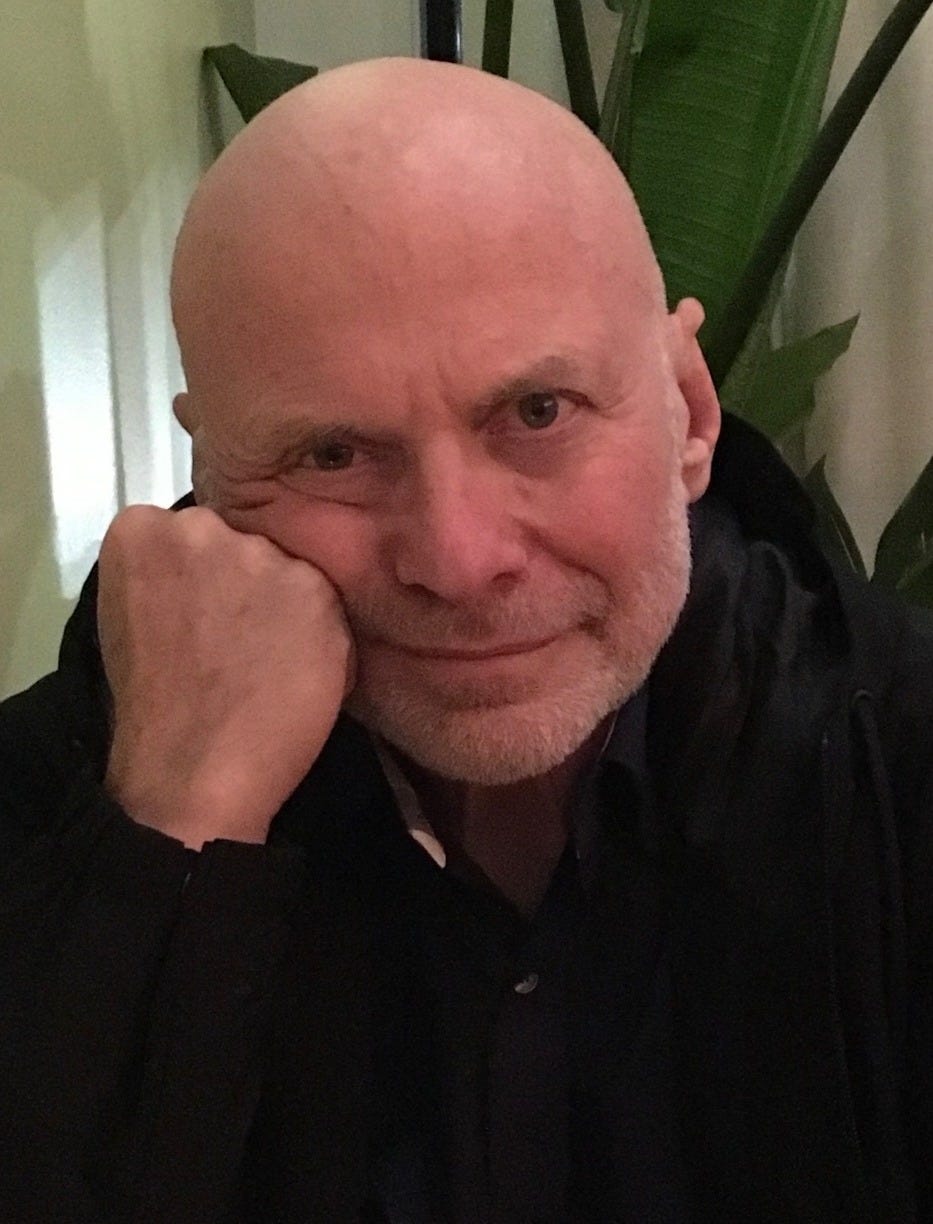
Saturday morning I received a text from Michael Goldberg’s longtime partner asking if we could talk. My heart sank immediately.
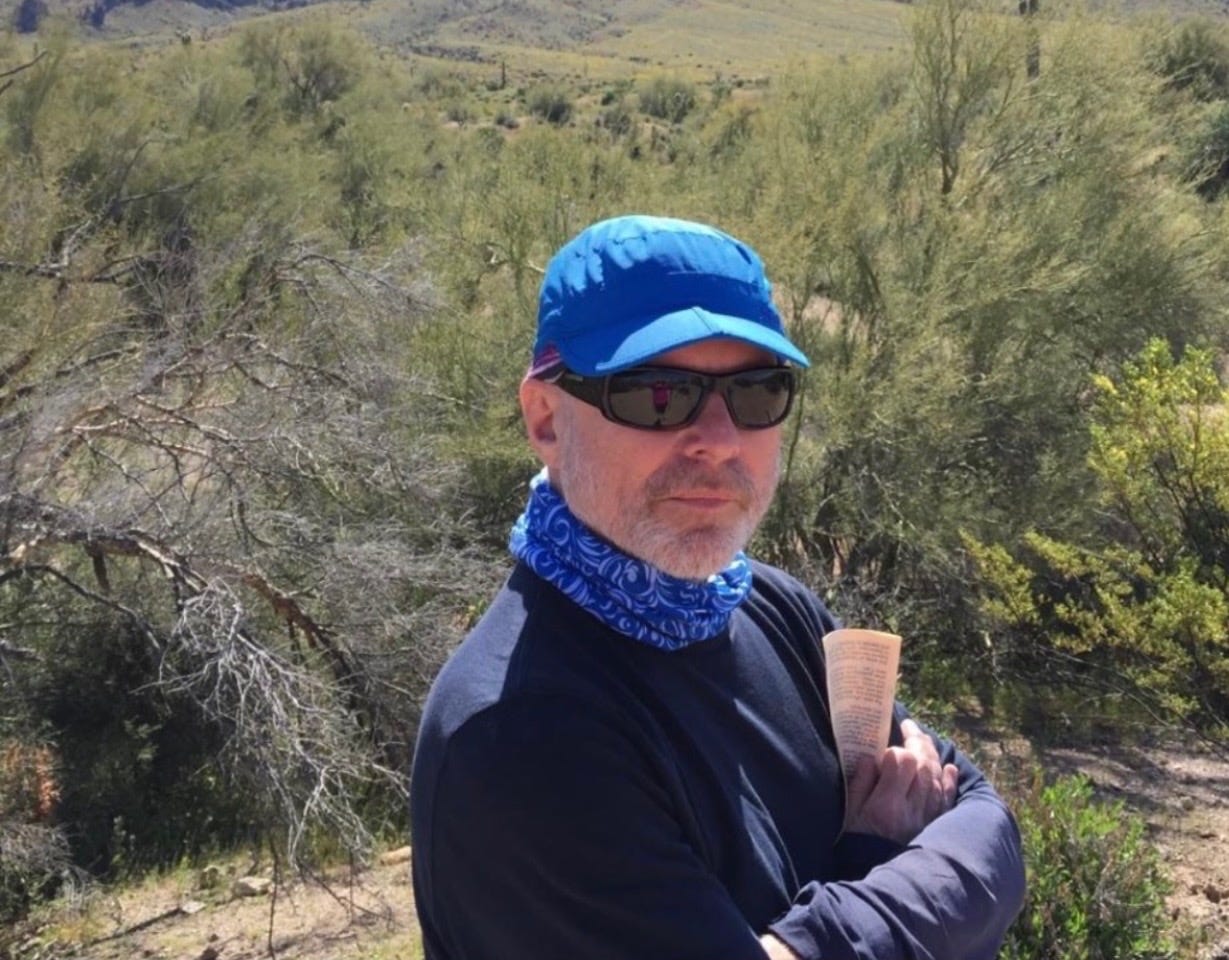
On Friday, June 12, Michael went hiking in South Mountain, just south of Phoenix, Arizona. The next morning his car was found parked overnight and believed to have been abandoned. Local authorities attempted unsuccessfully to contact him at home. What began as a welfare check quickly became a missing persons search. Four days later, on Tuesday, his body was found on a trail he loved and had walked countless times before.
Michael was full of life. He was endlessly curious, remarkably active, and seemed to possess the kind of vitality that made it difficult to imagine him ever slowing down. He was seventy-eight years old, and while part of me hoped we might have another decade or more of friendship ahead of us, another part of me somehow feared the worst as I answered the call.
Long before I met Michael, I knew his work.
Among students of the Enneagram, Michael was perhaps best known for his groundbreaking discovery of the Odyssey hidden within the Enneagram symbol. In his brilliant book Travels with Odysseus, he demonstrated how the nine major stops Odysseus makes on his journey home to Ithaca after the Trojan War correspond to the nine points of the Enneagram, beginning at Point Nine and moving counterclockwise around the circle.
What made the work so remarkable was that Michael never explicitly mentioned the Enneagram in the book. The teaching was concealed within the story itself. The explicit message was Homer while the implicit message was the Enneagram. Michael understood something many teachers miss. The deepest truths are often discovered rather than delivered.
His interpretation offered something even more profound than literary insight. He taught that before any of us can truly return home to ourselves, we must encounter, welcome, process, and ultimately integrate the energies of all nine energies that live within us. Odysseus’ journey was not merely geographical. It was psychological, spiritual, and deeply human.
Michael was also known for other original contributions to Enneagram theory. He described the clockwise wing as the Ally Point, a practical source of leverage and balance that offers an antidote to our habitual patterns. He described the counterclockwise wing as the Shadow Point, the rejected part of ourselves that we unconsciously push away and then project onto others.
One of my favorite ideas of his challenged the very way we imagine type itself. Rather than seeing ourselves as fixed points on the outer rim of the Enneagram circle, Michael wondered whether we might be better understood as fluid and moving somewhere within the interior lines of the symbol itself. It was a beautifully Goldbergian idea. The concept was perfectly Michael, curious, creative, and more interested in possibility than certainty.
When I finally met Michael in person in 2018, he was teaching a workshop for the Arizona Enneagram Association. He was unpacking the Odyssey through the notion of journeying beyond type. Though I arrived already convinced of his brilliance, what surprised me was his humility.
At that time, many of the legacy teachers within the Enneagram world carried a certain distance around them. Some felt inaccessible, guarded by reputation or status. Michael was the opposite. He was approachable, welcoming, and completely unpretentious. He possessed that rare quality of making everyone around him feel comfortable. Within minutes of meeting him, I felt less like I was encountering a renowned teacher and more like I was sitting down with an old friend.
Over the next couple years, we exchanged occasional emails, collaborated on a few Enneagram Learning Lab sessions, and recorded a conversation together for my Enneagram Mapmakers podcast.
Then my life started falling apart and that was when Michael showed up in a different way.
During my divorce, he became one of the trusted friends who consistently offered both wisdom and presence. He never rushed to fix things and never prescribed solutions. He just listened and with a deep compassion asked thoughtful questions. During those heavy days he somehow knew how to hold space for grief without trying to make it disappear.
And then what began as occasional conversations slowly became a rhythm. For the last four or five years, Michael and I tried to talk nearly every Friday afternoon. We both had busy lives, so sometimes those calls got pushed or postponed. But whenever too much time passed between conversations, I could feel it. Something in my own rhythm felt off like an important thread had gone missing.
Those Friday calls were often the highlight of my week. At first we talked about the Enneagram, but over time we ended up talking about almost everything except the Enneagram.
We discussed our writing projects and half-finished ideas. Sometimes we talked about the Midwest, which we both loved (Michael had studied at the University of Kansas and carried a deep affection for that part of the country). We’d talk about nostalgia and hope. Almost every call we talked about the manuscript he had been working on for years, something I was thrilled would soon be birthed into the world. And most meaningfully, we talked about aging and wonder and what it means to keep growing.
When we did talk about the Enneagram, I often wished I had recorded every one of those conversations. On one memorable call, Michael spent a couple hours explaining how subtle patterns in facial musculature could reveal unconscious habits of attention and offer clues to type. It was one of those conversations that left me simultaneously amazed by his intellect and delighted by his curiosity.
But the greatest lessons Michael taught me had nothing to do with the Enneagram.
I have often said that I learn more from my teachers by watching how they live than by listening to what they say. And Michael definitely embodied that truth.
As much as I treasured his friendship, he was also a mentor to me. He taught me what it looks like to remain curious without becoming cynical. He taught me how to stay close to the ground even when your work earns recognition, and especially when it was poorly reviewed. He taught me that wisdom and humility are not opposing virtues but companions. Most of all, he taught me about generosity.
I never once heard Michael speak ill of another person. Not once.
There were people who borrowed his ideas without crediting him. There were people who misunderstood him, dismissed him, and in some cases hurt him. Yet he refused to become bitter. He seemed genuinely uninterested in keeping score, and even didn’t feel compelled to the set the record straight. While many of us spend years carrying around our grievances, Michael kept choosing love. Which certainly wasn’t naïve but showed me in no uncertain terms what it means to be free.
He was a deeply complex man who spent his life moving toward simplicity. He was brilliant without needing to prove it and insightful without becoming arrogant. Michael was accomplished without becoming self-important. Every interaction with him left me wanting to be a better human being. I would leave our conversations inspired to live with more integrity, more humility, more honesty, and more love.
His books will remain foundational contributions to the Enneagram community. His essays, including the legendary “Enneagram Wars” published in LA Weekly, helped document and preserve an important chapter in the modern history of this work. His ideas will continue influencing students and teachers for generations.
But those accomplishments are not what I will miss most. I will miss hearing his voice on Friday afternoons. I will miss his laughter. I will miss his questions. I will miss the way he could take an ordinary conversation and somehow leave me seeing the world differently by the end of it. I will miss knowing that somewhere in Arizona there was a wise old friend still reading, still learning, still growing, still becoming.
Because that was Michael. He never stopped expanding his consciousness. He never stopped opening his heart. He never stopped learning. He never stopped loving.
A part of him will travel with me for the rest of my life. Beyond the gratitude I feel for his friendship, I also feel the weight of responsibility. Those of us fortunate enough to learn from him now become caretakers of what he invested in us. We become stewards of the curiosity, humility, generosity, and love he embodied.
Tragically, the last time we spoke, I had no idea it would be our final conversation. I suspect that is true for most of life’s most important goodbyes. What I know now is that my life is immeasurably better because Michael Goldberg was part of it.
May your soul find rest, my brother.
You surely deserve it. And may you know, wherever this journey has carried you now, just how deeply you are loved and how profoundly you will be missed.
What a loss and beautiful tribute to Michael.
What a beautiful tribute, Christopher. It was through your interview with him on your podcast that I was introduced to him. What a remarkable thinker. I loved your podcast and listen to it on my drives to my radiology sessions for my breast cancer. I am do glad that Michael was such a good friend to you when the world became so dark for you. That too tells me what a wonderful man he was.